



















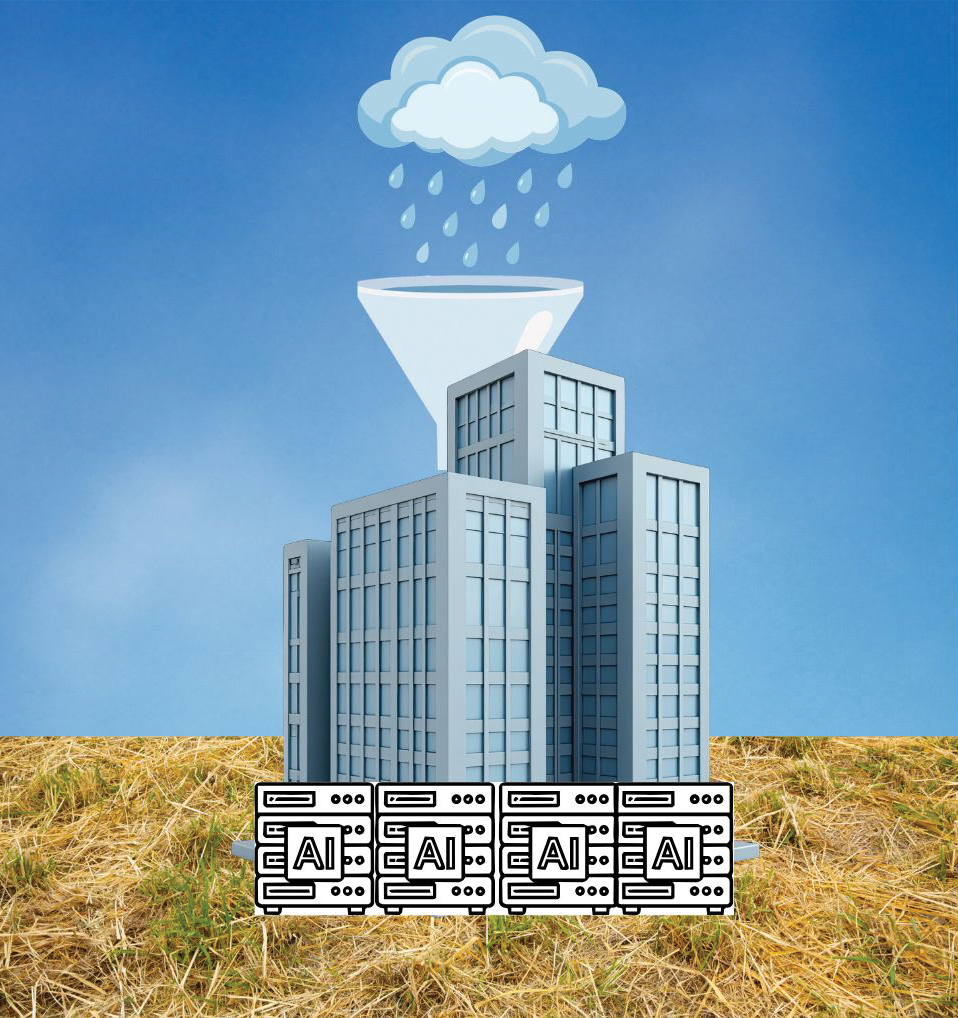
North Texas is quickly becoming one of the largest data center hubs in the world. But behind the rapid growth is a serious question: Who is paying the price?
The Dallas-based company DataBank recently secured a $2 billion loan to build a massive data center campus in Red Oak, south of Dallas, adding to a wave of projects across the region. Across North Texas, the first three of eight data centers are already operating.
Industry data cited by The Texas Tribune, shows Texas is expected to overtake Virginia as the world’s largest data center hub by 2030. That kind of growth isn’t normal. It’s explosive and it comes with consequences.
Data centers are extremely energy intensive. According to an analysis cited in The Dallas Morning News using federal data, a single one-gigawatt campus can use as much electricity as about 700,000 homes in a year, roughly the size of a city of 1.8 million people.
Texas’ power grid is already feeling the pressure. The Electric Reliability Council of Texas (ERCOT) is now projecting that electricity demand could more than quadruple to nearly 368 gigawatts by 2032, driven largely by data centers and other large users. Even officials have admitted those projections may be difficult to manage.
In simple terms, we are building faster than we can realistically support. Yet, the state is helping pay for it. According to The Texas Tribune, Texas is expected to lose an estimated $3.2 billion tax revenue over the next two years due to exemptions granted to data center companies.
The cost has grown sharply. From 2014 to 2022, the exemption cost the state between $5 million and $30 million annually. By 2023, it jumped to more than $150 million. This year, it is expected to exceed $1.3 billion. State projections suggest it could reach nearly $1.8 billion annually by 2030.
These exemptions cover a wide range of expenses, including servers, cooling systems, generators, software and even electricity, one of the largest operating costs for data centers.
To qualify for the tax break, companies must meet certain requirements, including investing hundreds of millions of dollars and creating a minimum number of jobs. However, these facilities don’t employ large numbers of people compared to their size and cost. At the same time, they place a heavy burden on land, water and energy resources.
State leaders are beginning to take notice. Lawmakers have described the rising cost of the program as “unsustainable” and are now considering changes. A Senate committee is expected to review the issue in upcoming hearings.
Meanwhile, public concern is also growing. Communities across Texas including San Marcos, Amarillo, College Station, Waco and Harlingen have seen local opposition to proposed data centers. A national poll cited by The Texas Tribune found that 65% of Americans oppose building a data center in their community.
We are building an industry that powers the future while also straining the systems that support it, the power grid, public resources and local communities.
The question is no longer whether data centers are important. It is whether Texas is expanding them in a way that is sustainable, responsible and worth the cost.
Right now, the answer is still unclear.