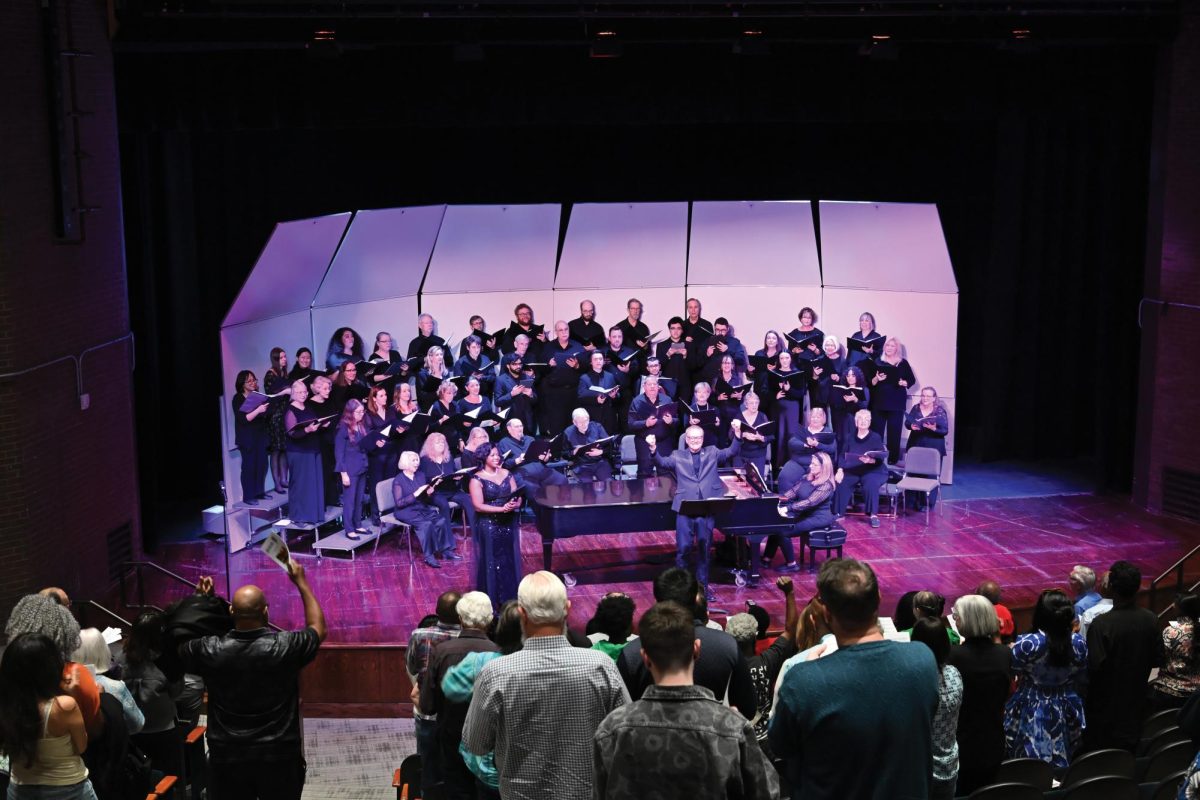



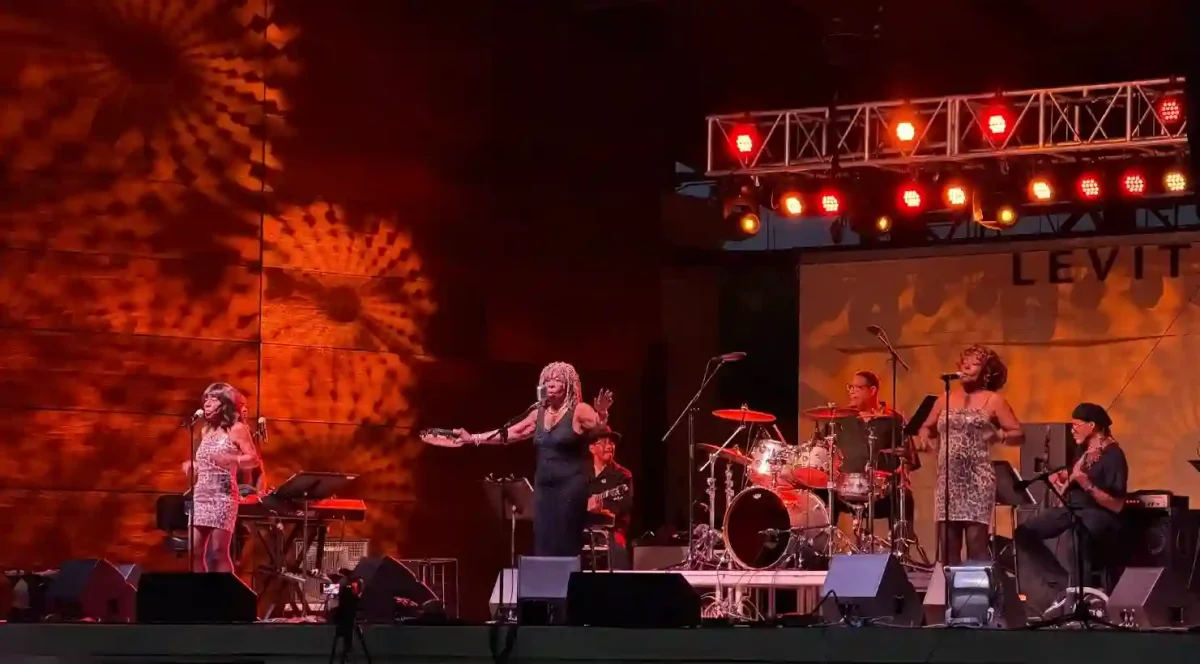






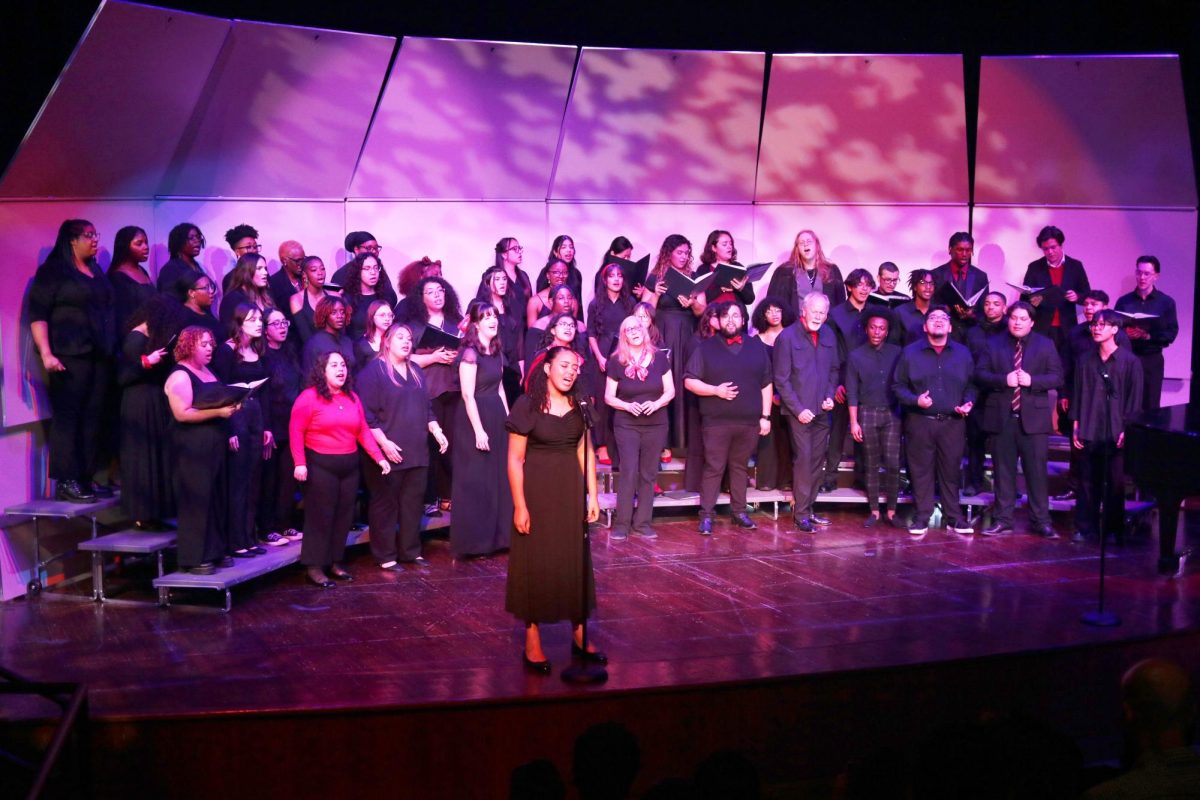
Excited chatter filled the performance hall as the audience eagerly waited for the Dallas College Choral Concert to begin on Nov. 12. The empty stage was illuminated with soft pink and purple lights and the students scheduled to perform were seated near the stage. Four campuses choirs participated in the concert. They included Eastfield, Cedar Valley, Richland and North Lake.
North Lake began with a beautiful choral piece entitled “The Hurricane” that combined the ensemble’s singing with claps and finger snaps meant to imitate the sounds of a hurricane.
“For the subject matter, I thought songs about storms were somewhat poetic for what is going on with our country and world without being overtly political,” said Dr. Erica Simmons, professor of voice and the director of choir and opera at the North Lake Campus. “I loved the body percussion and sound effects required for the pieces.”
Many people played a part in the production. “Callen Montoya, one of our composers, was a previous guest artist that performed with the North Lake Vocal Ensemble last year,” Simmons said. “Rose Mahaffey, our theatre technician, really brought the last piece to life with the lighting effects for the thunder and lightning effects. Dr. Andrew Evangelista arranged one of the joint pieces, and Professor Pamela Dawson selected the final joint arrangement.”
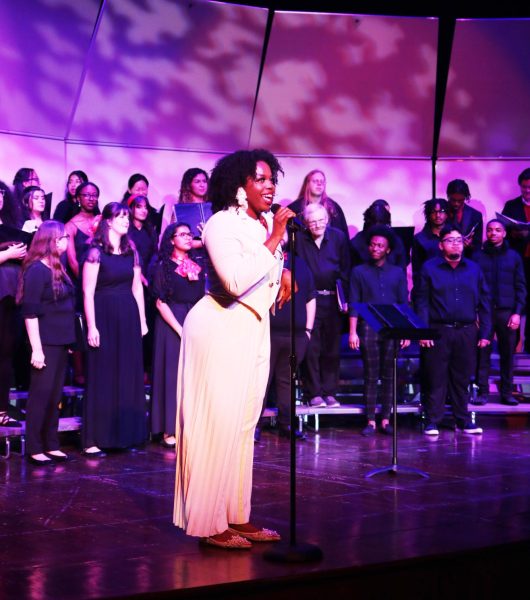
Callen Montoya, whose pen name is C. A. Montoya, was a student of the composer Paul David Thomas, who composed “The Hurricane.”
Continuing with North Lake’s nature theme, the Eastfield Campus chorus performed pieces that were inspired by the feeling of a passing rainstorm.
“I love a nature theme because, while that alone is of value, it often allows us to reflect on larger ideas that nature can inspire like introspection, hope and change,” said Prof. Melinda Imthurn, a professor of music and the coordinator of choral and vocal studies at Eastfield.
Next was the Cedar Valley Women’s Chorale and Cedar Valley Choral Ensemble. Prof. Pamela Dawson, their conductor, prefaced their performance with a description of the meaning behind their pieces. She spoke of civil rights and how the songs referred to specific people and historic events. During the performance of “The Shadow Dance of Sylva,” the choral ensemble performed arm movements and sang with strong conviction, which added to the power of the performance.
The Richland Chorus began their portion of the concert with a gentle, almost somber piece. Every member sang their parts with delicate care. After several Christmas-themed songs, they moved into the pieces arranged by Dr. Andrew Evangelista for the Richland Jazz Singers. These jazz songs, as well as “Can We Talk” which was performed by combined ensembles, were livelier tunes that lifted the audience into a more playful mood.
The collaboration between campuses delighted those involved. “Every step was actually pretty great, but right now I’m feeling the afterglow of the concert itself and working together to create a program as well as seeing the students enjoy singing together in the combined selections,” Imthurn said. “Dr. Erica V. Simmons did an excellent job coordinating this concert.”
“Our directors for that concert – it was so great to work with them because we all knew the job, we lived the job, it’s what we do,” said Dr. Andrew Evangelista, a professor of music and the director of choir and vocal jazz at the Richland campus.
For students who may be interested in registering for classes in voice, Simmons encourages them to take the leap regardless of previous experience. “I accept students who can barely hold a key to those that were all region participants,” she said. “At the end of the day, we make each other better and provide community for students through the beauty of harmony.”
Several directors also offered advice for students interested in pursuing music as a career.
“It is super important to talk to a full-time faculty member in the music area on your campus,” Imthurn said. “If you can do it before your register for classes, that will help you a ton – and I promise we are all glad to take the time!”
Imthurn added that while the Success Coaches and Pathways Specialists have the basics of courses you will need for the degree, speaking with someone who specializes in music will have a positive impact on scheduling.
She also emphasized the importance of starting sooner rather than later. “Never ‘take your core classes first’ if you want to study music, because our courses are a sequential two-year program. You have to start while you take your core classes. Not after you take them.”
“A school is only as good as its applied lesson instructors and paying more to go to a high-priced school does not automatically equal better,” Simmons said. “This is why Dallas College programs are so important. Students have access to professors who have traveled the world and know the industry at the fraction of the price. In addition, I would say to have tough skin. This is a tough career that requires tenacity, hours of practice and grit, but it is so rewarding to wake up every morning and do what you love!”
Evangelista spoke about the value of following wherever one’s gifts may lead. “If that’s where you find yourself being called, then it’s not worth ignoring it,” Evangelista said.
He encourages students to follow their passion and to serve others to the best of their abilities.
“Whatever our jobs are, you get very masterful at them, very skillful, so that you can do as much good as deeply and as frequently as possible,” he said.