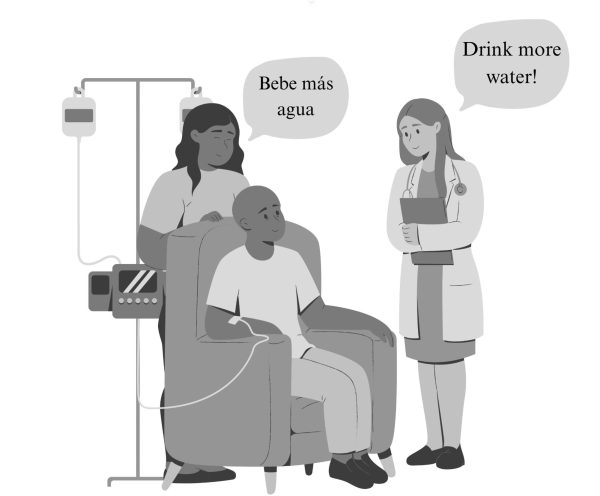









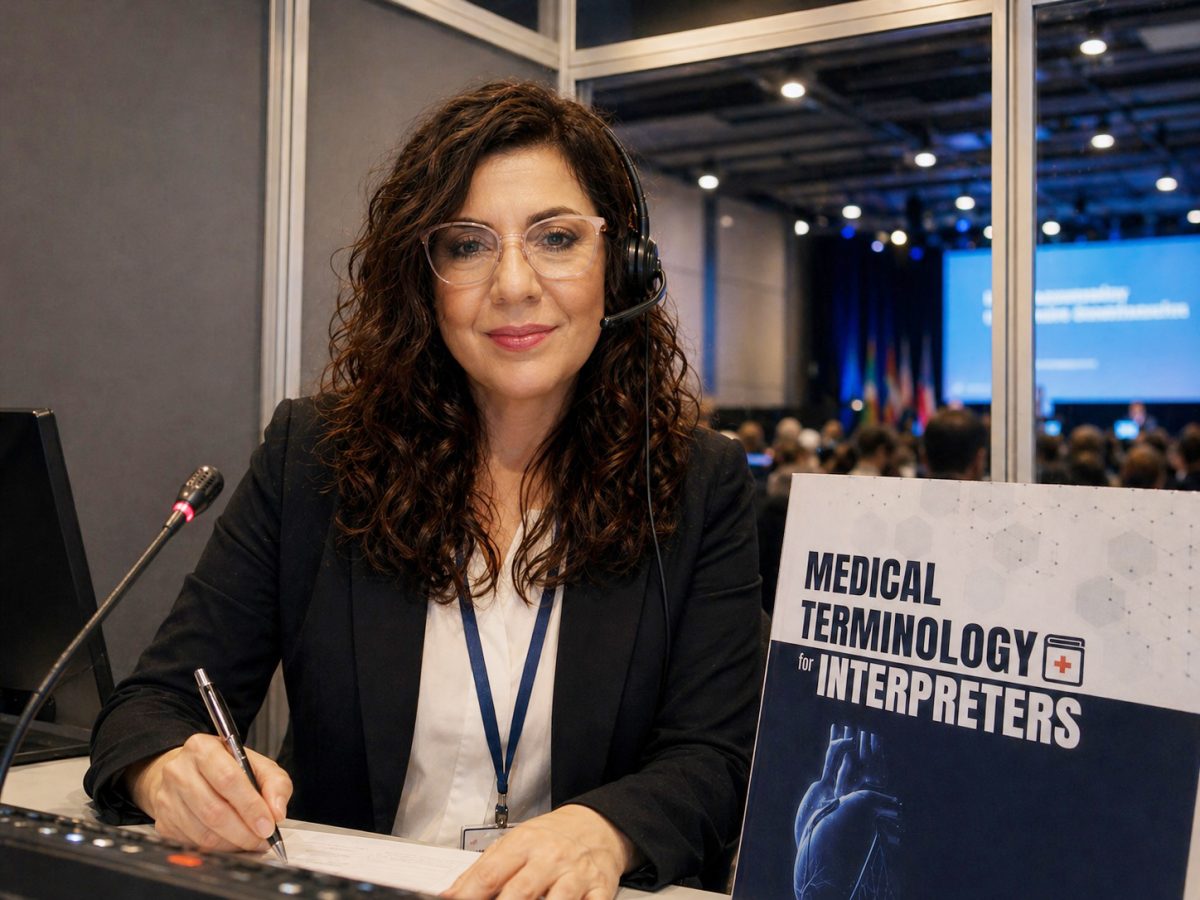
“What if a patient’s life depended on being understood?” That question lies at the heart of a growing program at Dallas College, where Dr. Silvia Graham prepares bilingual students to become professional medical interpreters.
Through the Medical Spanish Interpreter course (SPAN 2389), students receive about 48 hours of specialized training to launch them into the national certification process and meet the rising demand for interpreters in healthcare.
The course is specifically tailored for bilingual English Spanish speakers, reflecting the high demand for Spanish-speaking interpreters in the community. While interpretation services are needed in many languages, Dallas College currently focuses on Spanish due to its widespread use in healthcare settings across the region.
Students can complete the program in as little as eight weeks or extend it to 16 weeks, depending on their availability.
Rather than teaching a new language, the course emphasizes professional application by helping students interpret accurately, use medical terminology correctly, and follow strict ethical and legal standards.
According to Graham, students who complete the course can begin working almost immediately in freelance or contract roles.
“Many agencies offer around $25 per hour for on-site assignments, often with a 2-hour minimum,” she said. “There are also virtual and over-the-phone opportunities that range from $18 to $25 per hour.”
Beyond healthcare, the training opens doors to careers in education, social services and community organizations, fields where accurate communication can be just as critical.
“The goal is to prepare students to function effectively in real-world interpreting environments,” Graham said. “Although the training is rooted in healthcare, these skills can also be applied in education, social services and other community-based roles.”
Students can apply to agencies, hospitals, clinics and community organizations. Many begin with contract or freelance work while continuing to build experience and pursue full certification.
The course also serves as a stepping-stone toward full certification through the National Board of Certification for Medical Interpreters (NBCMI). Certification itself involves passing both a written and oral exam.
After passing the written portion, candidates earn the Hub-CMI credential, demonstrating foundational knowledge in medical terminology, ethics and standards of practice. Spanish-language candidates must then pass an oral exam to become fully certified as Certified Medical Interpreters (CMIs).
The course has already proven successful for students like Susana Abdalla, who recently completed the course and began her certification journey. “I used to work as a bilingual teacher and interpreter in a school and I wanted to build on that experience to help others,” Abdalla said.
She described the course as both challenging and rewarding. “It was a tough class with lots of work, especially balancing school, work and home life. But I learned so much about medicine and the healthcare field—things I wouldn’t have known otherwise.”
Abdalla credits Graham’s teaching style for her success. “She was very clear with instructions and always made herself available for questions. She provided plenty of resources, which made a big difference,” she said.
After completing the course, Abdalla passed the written certification exam and earned her Hub-CMI credential. She is now preparing for the oral exam and feels confident moving forward. “The class was rigorous enough that I felt very prepared when I saw the test questions,” she said. “It was 100% worth it and I would highly recommend it.”
The Dallas College Medical Spanish Interpreter Course (SPAN 2389) is also recognized by the International Medical Interpreters Association (IMIA), confirming that it meets national standards for interpreter education, an important advantage for students entering the field and seeking credible training.
As language barriers remain a significant challenge in healthcare, programs like this one are helping bridge the gap, one interpreter at a time.
With more bilingual professionals entering the field, the question may soon shift from whether patients can be understood to how quickly help can arrive.